


About Sadowara Doll
Sadowara Dolls are believed to have originated around 400 years ago, when Korean immigrants living in Sadowara—an area in the northern part of present-day Miyazaki City—taught local people the techniques of doll making. The exact date of their origin remains uncertain, as several historical theories exist.
After the region passed from the rule of the Ito clan, a powerful feudal family, into the domain of the Shimazu clan, cultural exchanges with Kyoto became more active. As a result, Sadowara Dolls gradually developed a style influenced by Fushimi Ningyo, the traditional clay dolls of Kyoto.
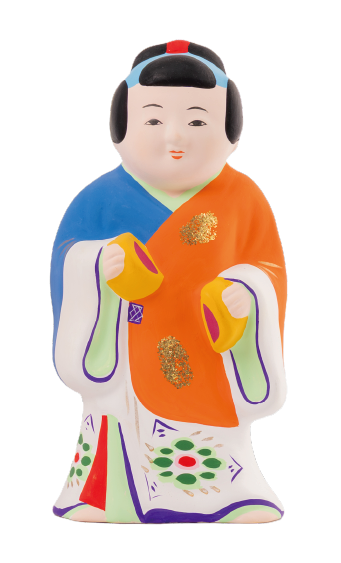
Among the many types of Sadowara Dolls, the most iconic is the Manju-eating Doll. This doll traces its origins to a Fushimi doll that originally depicted a boy. It was later reimagined by Hyozaburo Sakamoto, the third-generation proprietor of Masuya, who transformed the figure into a girl by giving it a traditional hairstyle. This design has been passed down to the present day.
According to a popular story, the doll represents a child who was once asked, “Which do you love more, your father or your mother?” Rather than answering directly, the child immediately broke the sweet bun in their hands into two equal pieces and replied, “Which half tastes better?” The doll is said to embody this charming tale of wisdom and fairness.
For generations, Sadowara artisans produced dolls for seasonal festivals and celebrations. During the Meiji era (1868–1912), Kabuki-themed dolls became especially popular. At that time, amateur Kabuki performances flourished in Sadowara, where local farmers enthusiastically staged productions with remarkable skill. The community’s deep affection for Kabuki inspired the creation of many expressive Kabuki dolls.
At Masuya Sadowara Doll Shop & Workshop, we are dedicated to preserving the traditional molds, designs, and techniques handed down through generations, while continuing to create and safeguard this unique cultural heritage for the future.
About us
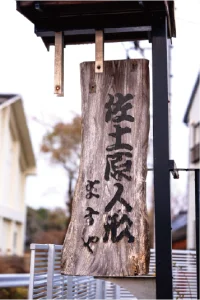
The Sakamoto family is said to have once operated a sake brewery. The workshop name, “Masuya,” is believed to derive from the masu—the traditional wooden measuring box used for serving and measuring sake. Many old doll molds still bear the inscription “Masuya”on their backs, preserving a connection to this earlier chapter of the family's history.
Although no documents or tools related to the brewery have survived, the name Masuya has been passed down through generations alongside the tradition of doll making.
“Rather than creating dazzling dolls that attract attention at first glance, I want to create dolls whose charm and character reveal themselves the longer you look at them.”
These words, spoken by Kazuko Iwakiri, the fifth-generation successor, embody the philosophy that continues to guide Masuya today.
Our dolls are created not merely as ornaments, but as companions to everyday life—bringing warmth, comfort, and quiet beauty to ordinary moments. By celebrating simple scenes and familiar emotions, we strive to create dolls that enrich daily life and grow more meaningful with time.
About Dolls
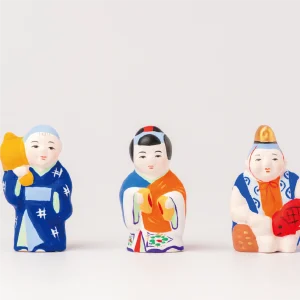
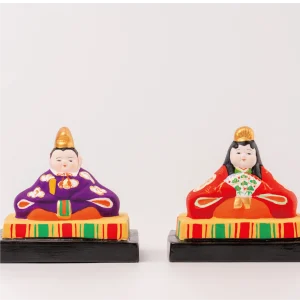
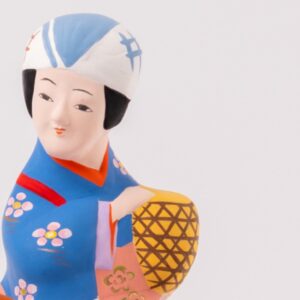
Sadowara dolls encompass a wide variety of forms, including simple warabe dolls depicting children, seasonal festival dolls, Kabuki-themed dolls, Good-Luck Dolls, and Zodiac Animals Dolls. Each reflects the wishes, beliefs, and spirit of the era in which it was created, and these dolls have been cherished by generations of people.
The dolls are made using either clay molds or plaster molds and are produced through two traditional techniques: hand-pressing and slip-casting. Differences in molds and production methods give each doll its own unique character, expression, and texture.
Simple in appearance yet rich in history and craftsmanship, Sadowara dolls offer a fascinating glimpse into Japan's folk art traditions. We invite you to explore their unique charm.
Child Warabe Dolls
Seasonal Festival Dolls
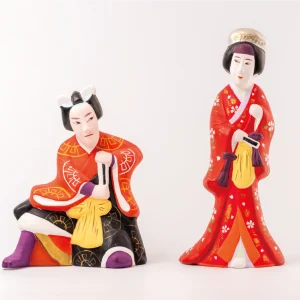
Kabuki-Themed Dolls
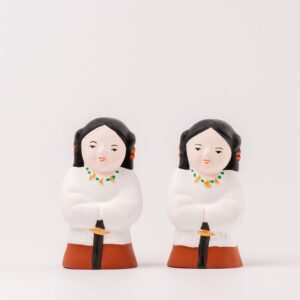
Good-Luck Dolls
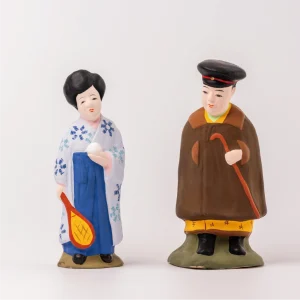
Folk-Custom Dolls
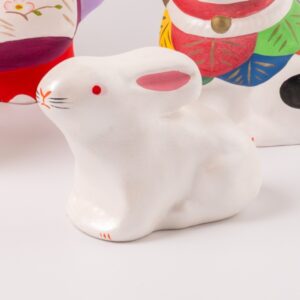
Zodiac Animals Dolls
Other Dolls
Workshop
Sadowara dolls encompass a wide variety of forms, including simple warabe dolls depicting children, seasonal festival dolls, Kabuki-themed dolls, Good-Luck Dolls, and Zodiac Animals Dolls. Each reflects the wishes, beliefs, and spirit of the era in which it was created, and these dolls have been cherished by generations of people.
The dolls are made using either clay molds or plaster molds and are produced through two traditional techniques: hand-pressing and slip-casting. Differences in molds and production methods give each doll its own unique character, expression, and texture.
Simple in appearance yet rich in history and craftsmanship, Sadowara dolls offer a fascinating glimpse into Japan's folk art traditions. We invite you to explore their unique charm.
News
Information
Masuya Sadowara Doll Shop & Workshop
Address
1396-11 Kamitajima, Sadowara-cho
Miyazaki City, Miyazaki 880-0301, Japan
+81-70-9000-9374
※Free parking is available on-site.
Openhour
10:00~17:00
Closed on irregular days.
Opening dates and hours are announced on our website and Instagram.